

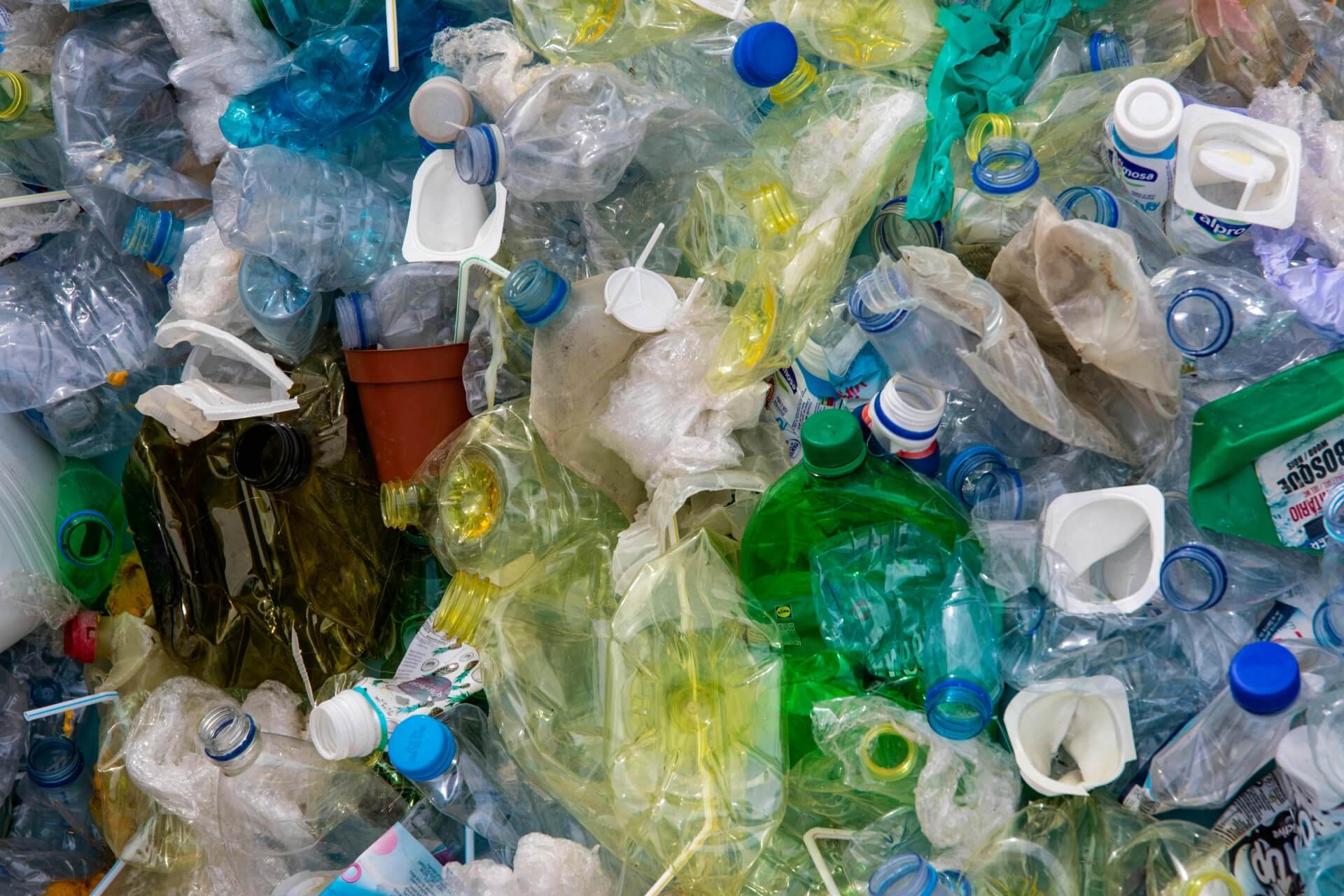
Extended Producer Responsibility – EPR.
What we do
Managing an EPR Scheme for over 700+ Members.
South Africa’s EPR regulations extend companies’ responsibility for certain products to the post-consumer stage, with the aim of ensuring such products’ life-cycle is effectively, and sustainably, managed.
epr plan
EPR Fee Structure.
Please see our latest EPR Fees below, and refer to our communication with regard to EPR Fees from the Minister of the Forestry, Fisheries and the Environment HERE
Rigids
Rigid plastic refers to a type of plastic material that is stiff, firm, and does not easily bend or deform under normal conditions. It is characterised by its structural integrity and ability to maintain its shape.
R260p/tonne
Polystyrene
Polystyrene is lightweight and can be challenging to recycle and transport in volume due to its low density nature.
R260p/tonne
Vinyl
PVC Vinyl cannot be recycled with other recyclable plastics due to contamination, however, used vinyl can be ground into pellets and melted down to create other vinyl products such as piping.
R260p/tonne
PET
Polyethylene terephthalate (PET) is a type of clear, strong, lightweight and 100% recyclable plastic. Unlike other types of plastic, PET plastic is not single-use and is made to be remade.
R420p/tonne
Flexibles
Flexible plastic packaging refers to plastics you can easily compress and fold – due to their flexible nature. Typical items include grocery and bread bags.
R470p/tonne
Multi-layer
Multi-layer plastic packaging products are composite materials using technologies aimed to give barrier properties, strength and storage stability – making them more difficult to recycle.
R790p/tonne
Industry information
Concurrence from the Minister on EPR Fees.
We are pleased to confirm receipt of the Minister of Forestry, Fisheries and the Environment’s concurrence letter on the 2022 proposed Extended Producer Responsibility (EPR) Scheme Fees, as well as the subsequent concurrence for 2025.

Polyco resource
Polyco's EPR Guidelines.
Polyco is South Africa’s Largest Plastics Producer Responsibility Organisation that manages an Extended Producer Responsibility (EPR) scheme on behalf of its members in South Africa. An EPR scheme refers to the legal obligation of plastic producers to manage their plastics packaging to ultimately end waste in the environment.
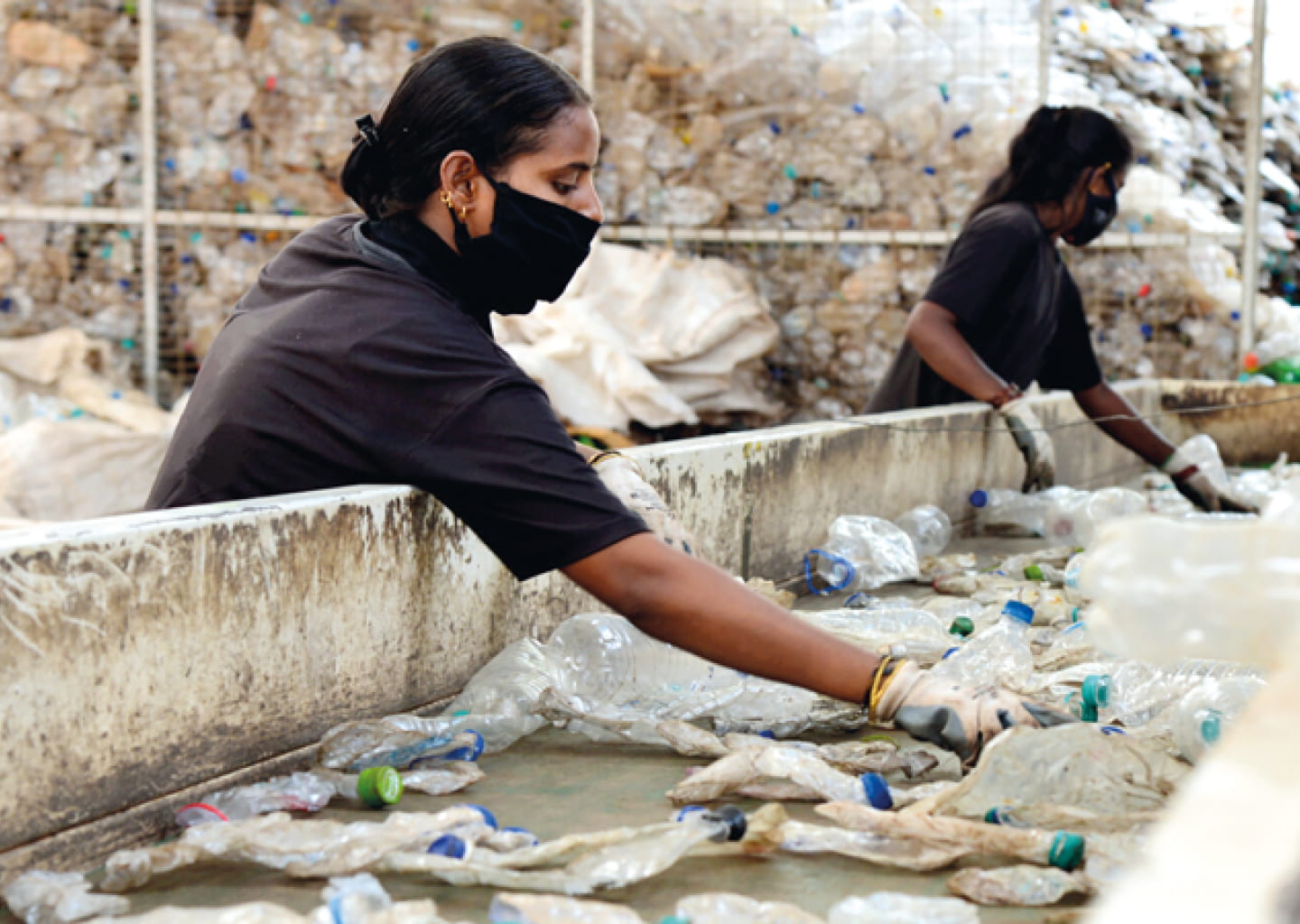
FAQS
Answers to frequently asked questions.
Extended Producer Responsibility (EPR) ensures that producers take accountability for the packaging they place on the market — here are some of the most common questions we receive. If you don’t find the answers you’re looking for, please make contact with us and we’ll do our best to help – epr@polyco.co.za.
Section A: Responsible obligated parties
If you are the Producer, then you pay and declare. According to the regulations, you are entitled to invoice the EPR fee to your customers. Please remember you are not allowed to add a mark-up to any EPR fee.
EPR fees is in fact VAT payable.
You are firstly a Producer if you are you engaged in the following:
- Commercial manufacture
- Conversion
- Refurbishment (Where applicable)
- Import
- All the above actions related to new or used identified products
- And if you place in excess of 10 tonnes of identified products onto the market per year.
Producers who place in excess of 10 tonnes of identified products onto the
market on an annual basis, responsible for extended producer responsibility under the regulations shall be identified subject to the following criteria:
- ( a) In the case where branded goods, either are identified products or are sold
- accompanied by or within identified products and the registered owner of the brand operates an enterprise, domiciled in South Africa, that makes and/or sells such goods, the producer shall be the paper, packaging, and single use product manufacturer, converter and/or the brand owner.
You are liable to register with a related PRO depending on material type. Example: Polyco does not manage paper streams (Fibre Circle is the paper PRO), and therefore you would need to signup with Polyco to manage (plastics) and Fibre Circle to manager (paper).
All stakeholders in the value chain are responsible for EPR and need to be subscribed to an EPR Scheme. The Producer is directly responsible for the EPR Fee and Declarations to its PRO.
Resin Producers are not obliged as they do not manufacture packing materials as identified in the regulations.
Section B: Membership
- Visit https://www.polyco.co.za/become-a-member/ to register your organisation.
The obligation is on Producers to comply with the regulations from the 5th of November 2021. The Minister has declared that declarations and EPR payments needs to be made from 1 January 2022. Late registrations with Polyco will require you paying and declaring from 1 January 2022. Late registrations with DFFE may still result with punitive action from government.
Section C: Fees
Producers will pay on the full weight of the multi-layer plastic material and not on the separated plastic material.
The EPR regulations manage and control the PRO’s obligations through regular reporting structures and audits – PRO’s are allowed specific percentages of overhead costs.
Section D: Governance
Please refer to Polyco EPR Guideline Document
Section E: Compliance
A PRO is only responsible for their registered member’s activities related to EPR. It is an offence to be non-compliant with the EPR regulations and non-compliance could result in punitive action being taken by the Government.
Section F: Monitoring And Evaluation
Polyco will ensure that continued development of the database can be undertaken so that it can be updated to meet the needs of Polyco’s EPR Scheme’s reporting requirements and will only share collated information in accordance to the regulations.
Polyco members will have access to the above-mentioned database to report on tonnages of their products placed on the market. Reporting will be done monthly via the monthly Declaration Form.
Members will be able to track information such as invoices as well as rebates that may be due.
Polyco’s EPR Scheme is focused on ensuring that material within the Scheme is collected and recycled to achieve the regulated targets. Individual product tracking is currently not possible; however, materials/plastic types will be tracked.
Section G: Targets
Polyco’s EPR targets will be measured based on the collection and recycling tonnages realised from projects implemented by Polyco as a percentage of Polyco’s membership representation of the total market. The targets will be determined based on the product type targets set out in the legislation i.e. rigid, flexible and multilayer polyolefin packaging; Vinyls, Polystyrene and PET beverage bottles, oil bottles, thermoformed PET and flexible PET. Targets will not be assessed against a specific item of packaging or specific polymer type e.g. PP.
This will change in time as we are currently working on the first iteration of the South African EPR Scheme. We are engaging with stakeholders and addressing certain points, with the collection of more data and refining of the Scheme we will be able to substantiate proposed changes with valid data.
Section H: End-Use Market Development
A big focus of the R&D component of the EPR Scheme is on identifying and stimulating secondary markets / end-use demand for additional recyclate into the market. Part of this process will be linked to the black industrialist programme as the intention is to stimulate this growth in line with enterprise development and additional Black owned recyclers and / or new end-use markets.
As part the R&D component of the EPR Scheme, Polyco would endeavour to provide guidance and promote recycling content in packaging. Strategic partnership between Polyco and the South African Plastics Recycling Organisation (SAPRO) and Plastics South Africa, for example, could allow for collaboration in this regard.
Section I: Municipal Collaboration
A PRO Alliance has been formed between all the packaging PRO’s to address certain points in the EPR Scheme jointly.Such as:
- Separation at source support and development
- Infrastructure e.g. facilitation of MRF development
- Equipment
- Operational assistance
Section J: General
Carrier bags are excluded from the amended regulations.
No. You will be responsible to the EPR fee to your supplier.
Polyco is responsible for the identified products as per the regulation.
In terms of building sustainable businesses, the Polyco EPR Scheme includes a grant funding application avenue for new entrants into the market. Part of the grant funding application is a minimum Broad Based Black Economic Empowerment (BBBEE) Level of 51% black owned business. As such, Polyco’s support to black owned businesses could be used by Polyco members for their BEE audits as funds used to support these businesses are sourced from Polyco members through the EPR fee.
Section K: EPR Dictionary
Identified products that have been exported out of South Africa. Exported identified products do not attract an EPR fee. Should you have paid an EPR fee to your supplier or to Polyco directly and then exported the packaging, you may request a credit based on auditable proof of the exported tonnages.
As per the Extended Producer Responsibility Regulations Definitions, “identified products” means products that are identified in terms of section 18 (1) a of the Act and published in the Government Gazette by the Minister; Polyco deals specifically with plastic packaging and this includes primary, secondary and tertiary plastic packaging as identified in the regulations and sold into the South African market.
Plastic packaging, as identified in the EPR regulations, that is not made locally but is imported from another country.
Plastic packaging, as identified in the EPR regulations, that is manufactured or converted in South Africa.
Converting
Importingof more than ten tonnes per annum of the identified products for first point of sale in to the South African market.
When we refer to the South African market we are referring to the end of life of identified products in both industrial and consumer markets in South Africa.
If the amount of identified products (primary, secondary and tertiary packaging) that you import and sell in to the South African market exceeds ten tonnes per annum, you are obliged to declare your tonnages and pay the EPR fees on those products.If you manufacture or convert and sell more than ten tonnes of identified product in to the South African market per annum you are obliged to declare your tonnages and pay the EPR fee on those products.
If you are below the ten tonne threshold you are not obliged to declare your tonnages or pay the EPR fee for that identified product.
Sign up to our newsletter!
Subscribe to our newsletter and stay updated on the latest EPR developments and our projects.